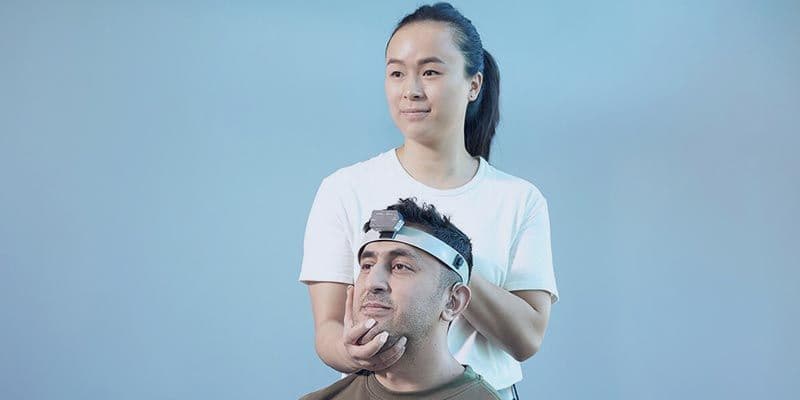
Why fvHIT Matters for Physical Therapists
Physical therapists routinely support patients with vestibular disorders, post‑concussion symptoms, chronic dizziness, and imbalance. fvHIT offers several clinically meaningful benefits for rehabilitation professionals:
1. Functional Insight into VOR Performance
fvHIT assesses how well a patient’s eyes and ears work together during rapid head movement, mirroring real-life conditions rather than isolated clinical metrics.
2. Assessment Across All Semicircular Canal Planes
The test evaluates VOR functionality in the lateral, LARP (left anterior–right posterior), and RALP (right anterior–left posterior) planes. This provides a comprehensive picture of vestibular performance across the full anatomical system.
3. Support for Targeted Treatment Planning
By identifying where VOR weakness occurs, physical therapists gain useful information for exercise selection, progression, and patient education.
4. A Real‑World Perspective on Daily Function
Because the test measures clarity during movement, it helps clinicians better connect diagnostic findings with patient-reported challenges such as reading signs while walking or maintaining stability in busy environments…
.
How fvHIT Works
fvHIT begins with lateral head impulses to assess the horizontal semicircular canals. The clinician delivers quick, small‑amplitude movements while brief optotypes appear on a secondary monitor. After each impulse, patients report the direction of the optotype. The test then moves to vertical canal planes—LARP and RALP—to allow assessment of all semicircular canal orientations. Throughout, head movement speeds and patterns vary to challenge the VOR across different frequencies. Software feedback helps ensure the correct movement plane is maintained, and responses are recorded using a handheld remote.